A small kitchen does not need to feel like a constant puzzle. It needs a clearer plan for what stays close and what can move away. Small kitchen storage solutions work when they use overlooked space without making the room feel crowded. Start by looking up, inside doors, and behind cabinet fronts. Those areas often hold more potential than another countertop container. The goal is not to fill every inch. It is to create room for the tasks that happen every day. A compact kitchen feels better when the important things are easy to reach. Everything else can step back. It makes each storage decision more useful.
Empty air is often the most useful storage area in a tight room. Walls, cabinet interiors, and the space above a refrigerator can support things that do not need daily access. A practical vertical kitchen storage helps you decide which items belong there. Store seasonal platters or occasional appliances higher up. Keep frequently used tools lower and visible. This creates layers without adding clutter. Use the inside of a door for shallow items when the cabinet allows it. Hang only what makes retrieval faster. The room should feel open, not overfilled. Good vertical storage creates capacity while protecting movement.
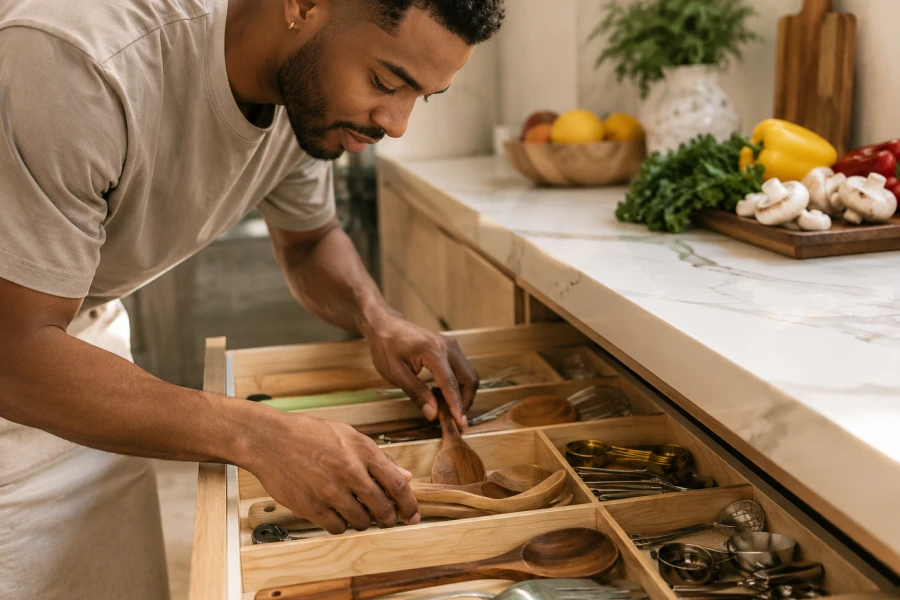
Daily tools deserve the best real estate. That does not always mean the counter. A drawer near the stove may be more useful for spatulas and measuring spoons. A slim pullout can keep oils and spices reachable without visual noise. A smart small kitchen workflow connects each tool to its most common task. Watch where you stand when you cook. Then shorten the distance between you and the items you use. This can reduce clutter without sacrificing convenience. Store backups farther away. Keep only the active version within easy reach. The result is a kitchen that feels calmer and faster at the same time.
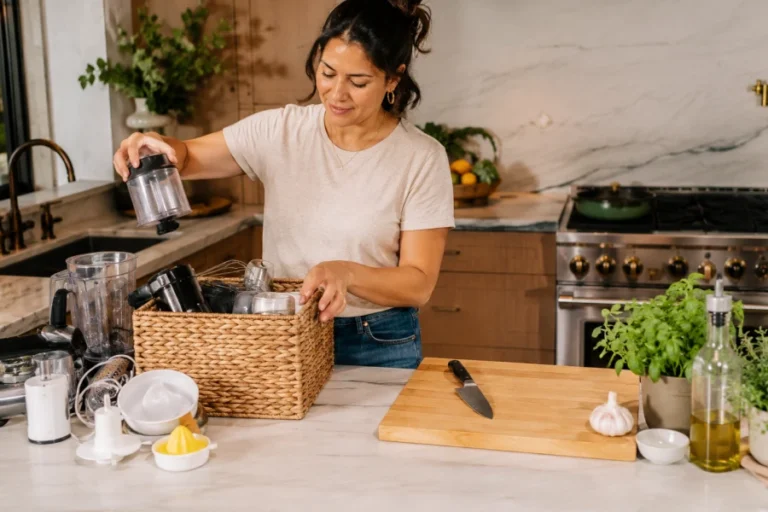
Counters work hardest when they are allowed to stay mostly clear. They hold groceries, cutting boards, hot pans, and serving plates. A focused kitchen storage zones protects that working space. Group appliances that share a routine, then store them together when possible. Use a tray for a small daily station rather than scattering several items. Choose one basket for loose items that tend to drift. These modest boundaries keep surfaces from becoming permanent storage. They also make a tiny kitchen feel less visually busy. An open counter changes how spacious the entire room appears. It gives cooking room to happen.
Matching containers can look satisfying, but flexibility matters more in a small kitchen. Food habits change. Appliances come and go. A useful countertop organization leaves room for those shifts. Choose adjustable shelves, stackable bins, and dividers that can move. Avoid building a system around an exact collection of items. Instead, create categories with a little breathing room. That way, a new package or tool does not break the whole arrangement. Flexible systems are easier to maintain. They also make a compact room feel more forgiving. Storage should support real life, not demand a performance.
A small pantry or cabinet benefits from clear categories. Keep baking goods together, quick breakfast foods together, and dinner staples together. A thoughtful pantry container system makes it easier to see what you already own. Use clear containers only where they truly improve visibility. Baskets can handle packaged goods without creating visual clutter. Put the oldest items forward. Keep a small overflow area so new groceries do not create chaos. This prevents duplicate purchases and forgotten ingredients. It also makes meal planning feel more possible. A little structure saves space because it saves attention.
The right storage plan changes the mood of a small kitchen. You stop bracing for the next cluttered moment. You know where items return after use. You have a clear place to set out ingredients. That sense of order matters, especially in a room that works hard every day. Start with the area that frustrates you most. A drawer, a cabinet, or one counter may be enough. Let that improvement guide the next one. The kitchen does not need to become large. It needs to become easier to live in.
Small spaces reward thoughtful choices. Keep what supports your routines. Let go of duplicates that block access. Use height, depth, and hidden surfaces with intention. Most importantly, protect one area for actual cooking. A compact kitchen can still feel generous when every zone has a clear job. Your storage should create options, not obstacles. With a few strategic changes, the room starts to breathe. Daily tasks become less complicated. That is the real measure of a successful small kitchen.

Leave a comment