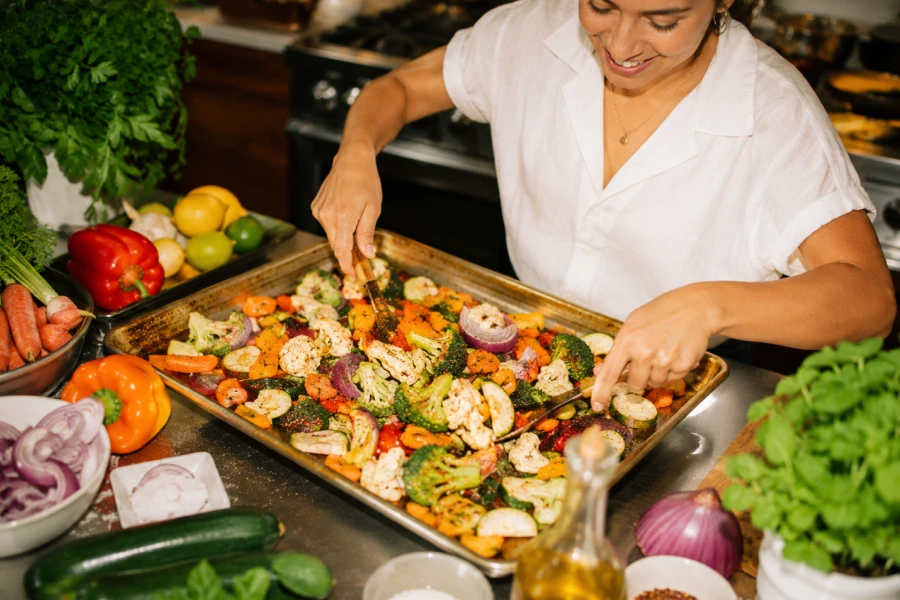
A sheet pan of vegetables can turn an ordinary weeknight into a meal that feels finished. The difference is rarely an elaborate sauce. Roasted vegetable cooking techniques work because they create contrast between browned edges and tender centers. That contrast starts with how vegetables meet the pan. Crowded pieces steam. Spaced pieces roast. Once you see the difference, the process becomes easier to repeat. Choose vegetables that suit the same cooking window. Cut them with a shared outcome in mind. Then let heat do work that a stovetop cannot duplicate. A simple tray becomes more interesting when every piece has room to change.
The pan deserves as much attention as the vegetables. A heavy, open sheet pan encourages evaporation and browning. A deep dish holds more moisture close to the food. That difference changes the final texture. A practical roasting pan setup begins with choosing the right surface for the result you want. Preheat the pan only when you want an immediate sizzle. Use parchment when cleanup matters more than maximum contact. Arrange food in one layer whenever possible. That keeps the heat moving around the pieces. It also makes turning and checking easier. Better roasting starts before the oven door closes.
Cutting is where evenness begins. Thick carrot coins, tiny broccoli florets, and large onion wedges will not finish together. Think in terms of density and size rather than one universal shape. A useful vegetable cutting consistency can help you pair vegetables with similar roasting speeds. Keep firm roots smaller than tender vegetables. Add delicate greens later if you need them. Separate different groups across the pan when timing varies. This does not make dinner complicated. It simply gives each ingredient a fair chance. A little planning prevents one ingredient from burning while another stays pale. Your tray looks better because the cuts were intentional.
Color is flavor in visual form, but it needs the right conditions. Moisture must escape before caramelization can begin. Oil helps heat reach the surface, yet too much oil can make vegetables heavy. A focused high heat roasting uses modest oil and confident heat. Season before roasting, then adjust after tasting. Avoid moving the vegetables too soon. Give one side enough time to develop color. Turn only when the pan tells you it is ready. A browned edge adds depth without extra ingredients. It makes simple produce feel more substantial. That is why patience belongs in the process.
Timing becomes easier when you stop treating every vegetable the same. Dense squash may need a head start. Asparagus or cherry tomatoes may join near the end. A reliable vegetable caramelization gives you a sequence rather than a fixed rule. Begin with the vegetables that need the most time. Add tender pieces when the first batch is already softening. This layered approach keeps colors brighter and textures cleaner. It also lets one oven serve several ingredients at once. Use the timer as a reminder to observe, not as a final verdict. The vegetables decide when they are done.
A roasted tray can anchor more than one kind of meal. Fold it into grains, layer it beside eggs, or finish it with beans and herbs. A smart oven roasting timing makes leftovers feel planned rather than repetitive. Keep sauces and crunchy toppings separate until serving. That preserves the roasted texture you worked for. A squeeze of lemon can brighten sweet vegetables. Yogurt or tahini can turn the tray into a full dinner. The same base can shift across the week without becoming boring. This is meal planning built around a method, not a strict menu. It gives you flexibility when plans change.
Roasting rewards preparation but does not demand perfection. A few clean cuts, enough space, and a hot oven carry most of the work. You do not need every piece to look identical. You need a pan that supports browning. Keep the flavor direction simple at first. Then use herbs, acids, or spice blends to shift the final plate. The best trays have contrast: soft, crisp, sweet, savory, and bright. Once you understand that balance, new combinations become easy. Your oven becomes a dependable weeknight tool. The vegetables do not need much help to taste remarkable.
Start with the produce you already have. Let color, season, and texture guide the combination. Use the same approach with broccoli and peppers one night, then squash and onions the next. The method remains stable while the tray changes. That is the value of learning a technique instead of memorizing a single recipe. You can build dinner around what needs using. You can cook ahead without losing interest. You can serve vegetables as a side or the center of the plate. One thoughtful pan makes the whole kitchen feel more capable. That is why a simple method keeps dinner both creative and practical.

Leave a comment