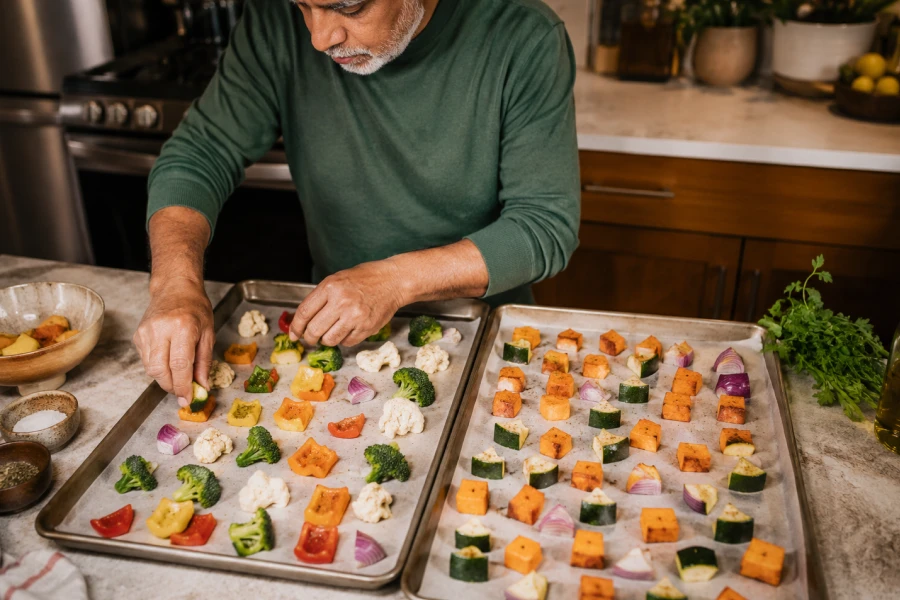
Uneven vegetables make a tray feel harder than it needs to be. One piece is soft, another is browned, and a third still seems raw. Learning how to roast vegetables evenly removes much of that uncertainty. The answer begins before oil or seasoning touches the bowl. It begins with deciding what should finish at the same moment. Similar pieces need similar dimensions. Dense vegetables need different treatment than delicate ones. Once you plan for that difference, the oven becomes more predictable. You spend less time rescuing the pan. Dinner comes together with far less hovering.
Think about thickness before you think about appearance. A beautiful mix of vegetables can still cook badly when the sizes ignore density. Potatoes and carrots need smaller cuts than zucchini or mushrooms. A practical vegetable cutting consistency helps you organize the tray around cooking speed. Group similar pieces together when possible. Use separate pans when the difference is extreme. This gives you a cleaner result than hoping every vegetable will catch up. You do not need a perfect dice. You need pieces that reach tenderness on a similar schedule. That distinction makes a noticeable difference.
A crowded evening calls for a method with few moving parts. Prep the pan, heat the oven, and give the vegetables space. A clear roasting pan setup makes the setup feel routine. Use a large tray rather than piling food into a smaller one. Keep a second tray nearby for overflow. Spread oil and seasoning evenly with your hands or a bowl. Then place the pieces cut-side down where possible. That contact supports browning while the rest of the tray cooks. The pan should look relaxed, not packed. Air around each piece is part of the recipe.
Mixed produce needs a sequence, not a compromise. Start with the vegetables that need the longest exposure to heat. Add tender vegetables later, or keep them on a separate pan. A helpful simple roasting workflow turns this into a simple timing plan. Roots, squash, and cauliflower usually need a longer start. Tomatoes, leafy greens, and asparagus need much less. This approach preserves color and prevents soft vegetables from disappearing. It also gives you the freedom to roast what you have. You are not limited to combinations that happen to cook alike. A staggered tray creates a more balanced meal.
The mid-roast check is about observation, not constant stirring. Open the oven when the vegetables have had enough time to make contact with heat. Look for browned undersides, softening edges, and any signs of drying. A focused oven roasting timing tells you when a turn will help rather than interrupt. Move pieces only if they need fresh contact with the pan. Rotate the tray if one side of the oven runs hotter. Resist flipping every item simply because a timer rang. The tray should give you a reason. That restraint keeps the browning process moving forward. A little patience here saves time later.
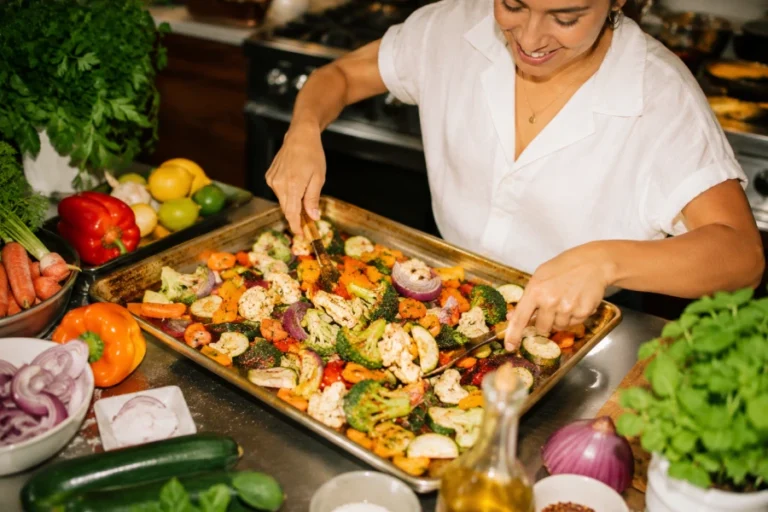
Even cooking should leave room for personality. Some vegetables deserve charred edges. Others taste best when just tender. Use salt, acid, and herbs after roasting to sharpen those differences. A useful high heat roasting can help you choose finishing elements that suit the tray. Lemon brightens sweet carrots. Crumbled cheese adds contrast to earthy mushrooms. Toasted nuts bring crunch to soft squash. Those details make a simple pan feel complete. Serve promptly when crisp edges matter. Then enjoy the fact that the method did most of the work.
Once the cutting and timing feel familiar, roasting becomes a quiet kitchen habit. You will recognize which pieces need a head start. You will know when one pan needs more space. These decisions become faster with repetition. The goal is not to make every tray identical. The goal is to understand how to shape the variables. That knowledge makes grocery shopping more flexible. It also makes vegetables easier to use before they fade in the refrigerator. A dependable tray gives you one less decision at dinnertime. That is a useful kind of confidence.
The best result is a pan where every bite feels considered. It does not require specialty equipment or complicated ingredients. It requires matching size, heat, and timing. Keep those three ideas visible and the rest follows naturally. You can roast for a side dish, a grain bowl, or a weekend meal prep session. Each tray teaches you something about your oven. Soon you will need fewer rules. The process will feel intuitive because you understand what the vegetables need. Evenness then becomes the starting point for more creative meals. That understanding gives you room to cook with more ease.

Leave a comment