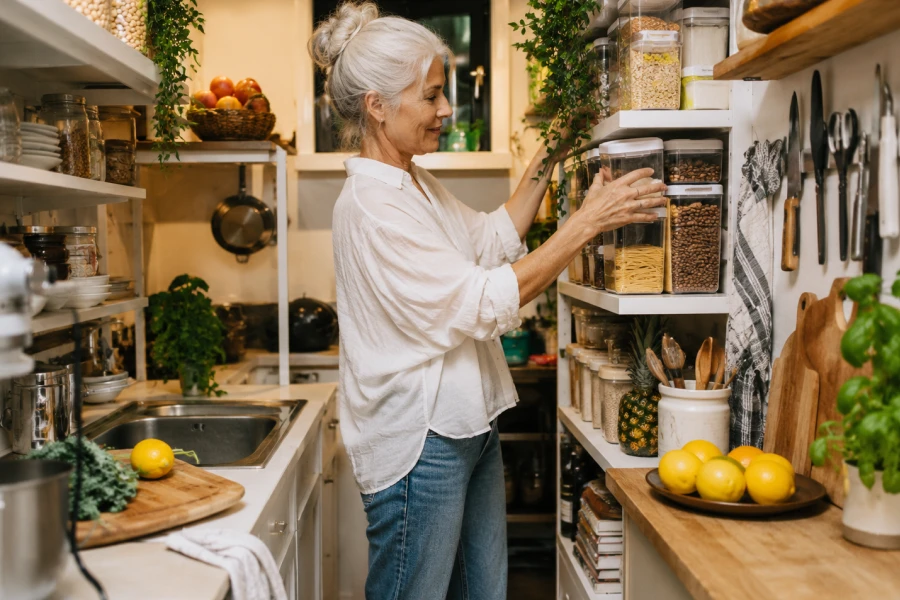
A pantry should shorten the path between a meal idea and the table. When ingredients disappear behind half-used packages, dinner planning becomes slower than it needs to be. A pantry organization system creates visibility without turning every shelf into a display. Start with the foods you reach for most. Pasta, grains, canned staples, snacks, and baking ingredients each have different rhythms. Put the fastest-moving items where your eyes naturally land. Reserve upper shelves for backups and less frequent supplies. This arrangement makes the pantry useful on a busy night. It also reduces the feeling that you need to search before you can cook. Clear placement makes that speed possible.
Traditional categories can help, but cooking moments are often more practical. Breakfast items can live together even when they include oats, tea, and nut butter. Quick dinner foundations can sit near beans, canned tomatoes, and grains. A useful pantry container system organizes food around the choices you make. Think about what you reach for when time is short. Create a section for those ingredients. Then give baking supplies their own contained area. This approach makes the pantry feel like a support system, not a warehouse. It also helps every household member find the basics. Good organization follows behavior as much as food type.
Visibility is the engine of a reliable pantry. You cannot use what you cannot see. A clear kitchen storage zones helps you bring similar packages into one simple zone. Use bins for small pouches and packets. Use containers for dry staples only when they make refilling and measuring easier. Keep labels simple or skip them if categories are obvious. Place tall items behind short ones only when you can still see both. The goal is an honest snapshot of what you have. That saves money at the store. It also gives you more options when you are deciding what to cook.
A well-arranged pantry reduces last-minute stress because it makes decisions smaller. You can see the ingredients for a simple pasta, soup, or grain bowl. You can spot what needs using before it expires. A practical meal prep storage gives you a place for leftovers from bulk packages. Use one basket or shelf for open items that deserve attention first. Move older goods forward as you unpack groceries. Keep backups grouped behind the active item. This first-in, first-out rhythm prevents waste without requiring a complicated inventory. It also makes the shelves easier to reset. A few consistent moves do more than a major overhaul.
Shopping becomes easier when the pantry itself tells you what is missing. Leave a little space behind active staples. When that space appears, you know it is time to replace something. A thoughtful kitchen reset habits lets you see patterns without counting every jar. Keep a running list nearby or add items to your phone as you notice them. Do not wait until you are completely out. This reduces the chance that dinner plans stall because one basic item disappeared. It also prevents overbuying because you can see your actual supply. The pantry becomes part of your planning routine. That is far more useful than a pretty shelf alone.
A reset should be light enough to happen regularly. Before grocery day, take five minutes to group stray items and check open packages. A focused AI kitchen planning gives those quick resets a clear purpose. Wipe one shelf if needed. Combine duplicates only when freshness allows. Return snacks, baking goods, and dinner staples to their zones. This small rhythm prevents the slow buildup of confusion. You do not need to empty the whole pantry every month. You need a way to correct drift before it becomes clutter. Maintenance works best when it feels ordinary. That is how an organized pantry stays organized.
Your pantry does not need to look like someone else’s. It needs to support the meals you make and the people who use it. A family with school lunches needs a different zone than someone who cooks mostly from dried beans. Let those needs shape the shelves. Keep the categories broad enough to adapt. Add a bin only when it solves a real problem. Remove a container that creates more work than it saves. Systems become sustainable when they are tailored. The right pantry is not static. It changes as your routines change.
One good shelf can start a larger shift. Choose the area that causes the most annoyance. Maybe it is spices, snacks, or dinner basics. Clear it, group it, and give it one simple purpose. Then let yourself live with the change. You will quickly learn whether it helps. Over time, the pantry becomes a practical map of your kitchen. It shows what you use, what you love, and what you can skip buying. That kind of clarity keeps weeknights moving. Each small improvement makes the next dinner easier.

Leave a comment