A great roasted vegetable tray does not need every spice in the cabinet. It needs a flavor direction that lets the produce stay recognizable. Roasted vegetable seasoning ideas work best when they build contrast, not confusion. Sweet vegetables welcome acidity or heat. Bitter vegetables often enjoy richness or a touch of sweetness. Earthy vegetables can handle herbs, citrus, or toasted seeds. Begin by asking what the vegetable already tastes like. Then add one or two elements that sharpen it. This approach keeps seasoning deliberate. It also makes the final plate taste clearer.
Carrots, squash, and sweet potatoes already bring natural sweetness. They often shine with salt, chili, citrus, or a tangy sauce. Broccoli and cauliflower can carry bolder spice because their flavor is more savory. A practical roasted vegetable pairings starts with that basic personality. Think of seasoning as a conversation rather than a cover-up. Use a warm spice blend when you want depth. Use lemon and herbs when you want lift. Add richness through olive oil, yogurt, or tahini when a tray needs grounding. One good contrast can make the whole pan feel alive. The best combinations leave room for the vegetable itself.
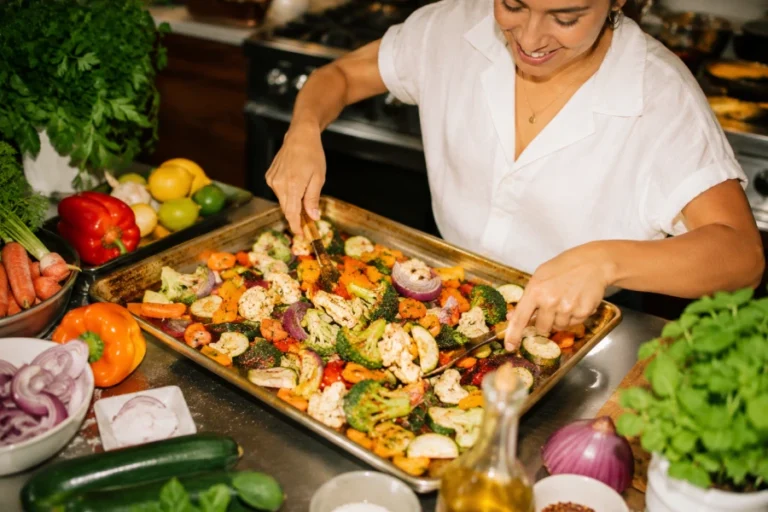
Dry spices need heat and fat to bloom properly. Toss them with oil before the vegetables go into the oven. Fresh herbs often work better near the end, when their aroma stays clear. A useful seasonal produce ideas helps you decide what belongs before roasting and what belongs after. Garlic powder may roast beautifully. Fresh garlic may burn if added too soon. Lemon zest can brighten a finished tray. Whole cumin seeds can become fragrant against the pan. Timing changes the flavor as much as the seasoning does. That is why a good tray has layers rather than one flat note.
Contrast can come from temperature, texture, or acidity as well as spice. Add crisp breadcrumbs to soft roasted cauliflower. Finish warm beets with cool yogurt. Scatter chopped herbs over caramelized onions. A thoughtful high heat roasting lets you build those details without overpowering the base. Keep the finishing ingredients simple. Choose one creamy element, one bright element, or one crunchy element. Then taste before adding more salt. This is where a roasted side becomes a dish with character. Small touches create a sense of intention. They also make leftovers feel more inviting the next day.
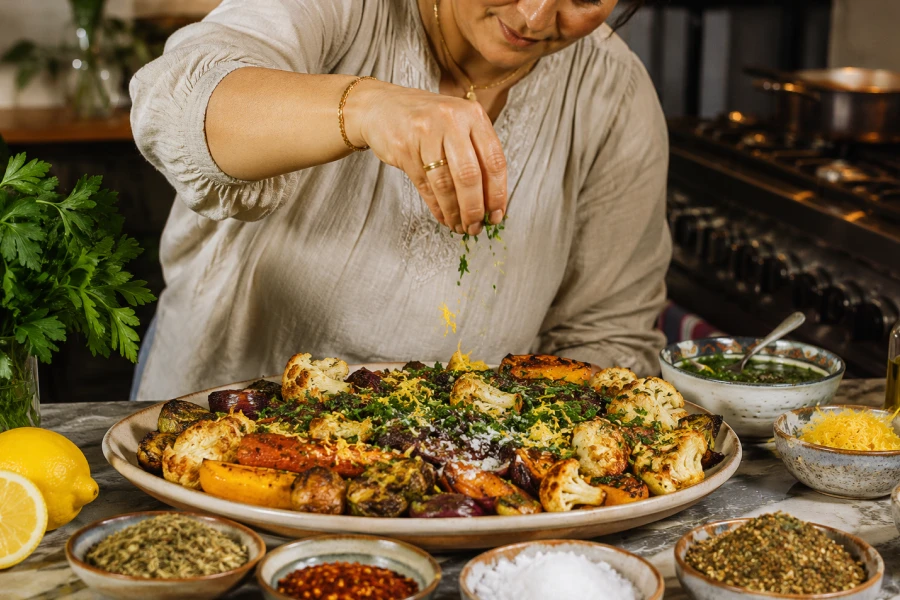
The last five minutes can transform the whole tray. A squeeze of citrus, a drizzle of honey, or a handful of herbs can reset the flavor. A focused simple roasting workflow encourages you to finish after the vegetables have developed color. That way, delicate ingredients remain fresh rather than scorched. Consider grated hard cheese for savory depth. Use vinegar sparingly when the vegetables are already sweet. Add chili crisp only when you want heat and texture. These choices should wake up the tray, not bury it. Taste as you go. Your palate will tell you which final contrast is missing.
A small, reliable pantry makes seasoning easier on busy nights. Keep a few spices, acids, and crunchy toppings you genuinely use. A flexible vegetable caramelization can help you build combinations from those staples. Smoked paprika, cumin, crushed red pepper, sesame, and dried herbs cover many directions. Lemon, vinegar, and yogurt provide brightness and balance. Nuts or seeds add welcome texture. You do not need a wall of jars to cook creatively. You need a set of ingredients that play well together. That kind of pantry supports experimentation without waste. It also gives simple produce more possibilities.
Seasonal produce can shape the flavor plan. Spring vegetables often want herbs and lemon. Summer vegetables can take char, garlic, and basil. Fall squash loves warmth, tang, and toasted flavors. Winter roots welcome deep spices and bright finishing acids. Let the market guide the direction rather than forcing the same blend year-round. This keeps roasting from becoming repetitive. It also makes familiar methods feel new. The goal is not to memorize combinations. It is to learn how sweetness, bitterness, richness, and acidity relate. Once you see those relationships, seasoning becomes easier to improvise.
The most memorable trays usually have one clear idea. Maybe they are smoky and bright. Maybe they are herby and creamy. Maybe they are deeply savory with a sharp citrus finish. Pick that idea before you reach for the spice drawer. Then build around it with restraint. A few thoughtful choices will taste more polished than a crowded blend. Roasting gives you sweetness and color for free. Seasoning should highlight those gifts. With a little contrast, vegetables become the part of dinner everyone remembers.

Leave a comment